

Let me be direct: if you're running a gaming cafe in North America or the UK right now and you're still on legacy software, you're probably bleeding money in ways you haven't fully quantified yet.
The gaming cafe market is genuinely expanding — — and operators from Chicago to London are opening new venues with real capital behind them. The software running those venues has become a competitive differentiator in a way it simply wasn't five years ago. One platform has pulled ahead for English-speaking markets specifically: iCafeCloud.
This is my honest breakdown of what it does, where it earns its reputation, where it still has gaps, and who should actually consider it.
What Is iCafeCloud and Where Does It Fit in the Market?
Gaming cafe software is not glamorous. Nobody gets excited about billing engines or session management dashboards. But that's where things get interesting — every hour your billing system misfires, every session that runs over without charging, every game that fails to launch on a machine a customer is sitting at: that's direct revenue walking out the door. This is mission-critical infrastructure dressed up in boring packaging.
iCafeCloud is a cloud-based, all-in-one gaming cafe management platform built for internet cafes, esports lounges, and LAN centers. It targets operators running anywhere from 10 seats to multi-location chains across the US, UK, and Canada. Unlike legacy competitors such as Antamedia Internet Cafe Software or older on-premise systems, the whole architecture is built around remote management, real-time monitoring, and a centralized game library.
That cloud-first design choice is not a marketing bullet point. It's the thing that actually changes how you run your operation day to day.
What iCafeCloud Does Differently — And Why It Matters
Most legacy internet cafe management software was designed in the early 2000s and patched forward ever since. You can feel the age in the interface, in the workflows, in the assumptions baked into how everything is structured.
The most immediate practical difference with iCafeCloud is remote management. An owner in Toronto can monitor active sessions, push game updates, restart problem machines, and pull revenue reports from a smartphone without being on-site. Legacy systems require a local server and physical presence to do the same tasks. That gap sounds minor until the third time you drive across town at 10pm because a machine is frozen and your staff has no idea how to fix it.
The second differentiator is the integrated game library — and this one is genuinely underappreciated by operators who haven't dealt with the alternative. iCafeCloud maintains a curated, pre-licensed game catalog you can deploy across all client machines from a single dashboard. Manual installation, license tracking, and update management across 50 machines is not just annoying — it's dozens of staff hours per month disappearing into a task that software should be handling automatically.
[PRO TIP: When evaluating any gaming cafe management software, ask the vendor specifically how game updates are handled at scale. Manual update processes across 50+ machines are a hidden operational cost that adds up fast.]
Core Features — The Honest Breakdown
Billing and Session Management

The billing engine works. That sounds like a low bar, and in this product category, it kind of is — but after years of operators dealing with systems that drop sessions or fail to lock workstations when balances run out, "it works reliably" is actually a meaningful thing to say.
iCafeCloud handles time-based billing, prepaid packages, membership tiers, and promotional pricing, all configurable from the admin panel. Hourly rates, day passes, loyalty points — the standard toolkit is there. The system tracks session time in real time and automatically locks a workstation when a customer's balance hits zero. For UK and Canadian operators dealing with local payment processing standards, iCafeCloud integrates with major payment gateways and supports multi-currency configurations — though your mileage may vary depending on your specific processor.
Remote Monitoring and Multi-Location Management
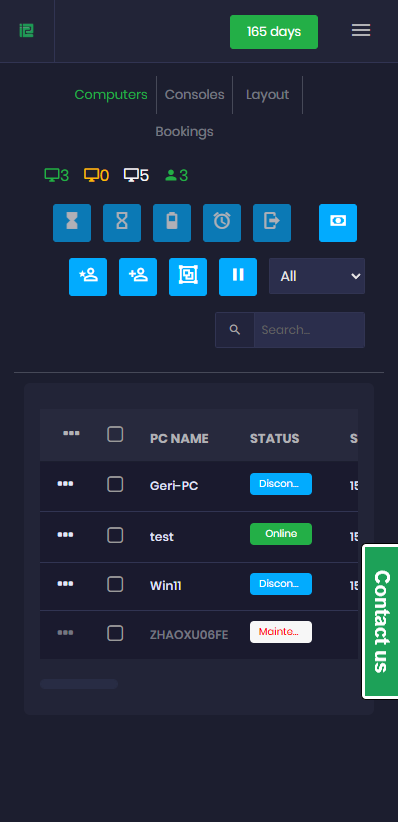
This is where iCafeCloud earns its position as the best internet cafe management software for growing operators. Full stop.
The cloud dashboard gives you a live view of every seat across every location — which machines are in use, which are idle, which have technical issues, what games are running — all from one interface, whether you're in the building or not. For operators managing multiple venues across different cities or different countries, this centralized visibility changes how you make decisions. Staffing, promotional timing, hardware maintenance scheduling: these stop being gut-feel calls and start being data-driven ones.
I'm honestly not sure this feature gets enough attention in most evaluations of gaming cafe management software. People focus on billing and game libraries, which are obviously important, but the remote oversight capability is what separates a scalable operation from one that requires the owner to be physically present to function.
Game Library and Content Delivery
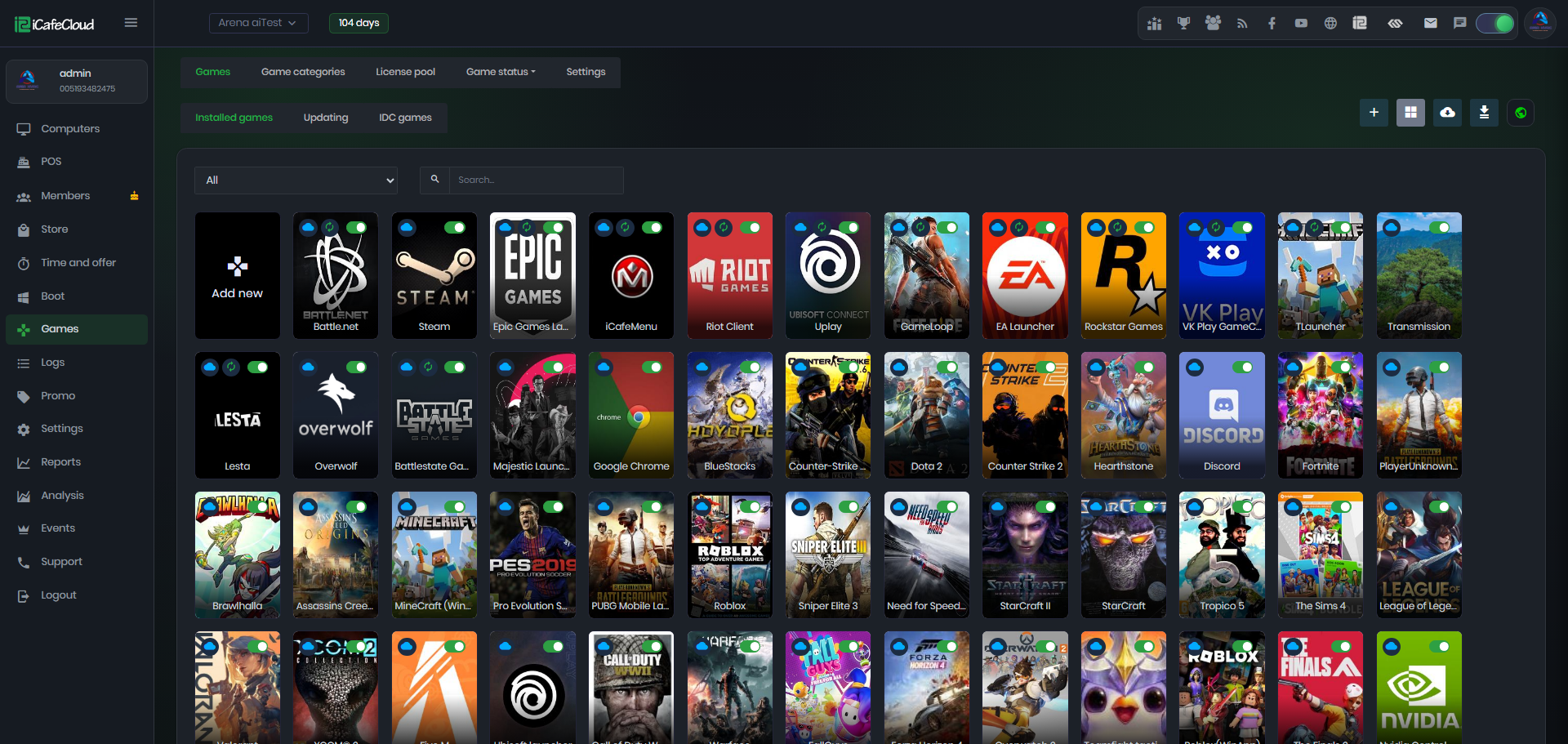
iCafeCloud's managed game library is one of the clearest gaps between it and generic internet cafe management software.
Working through publisher licensing as an individual cafe operator is genuinely painful. iCafeCloud maintains partnerships with game publishers and handles licensing compliance on the operator's behalf, which reduces that burden significantly. Content is delivered and updated centrally — for a 60-seat venue, this saves several hours of staff time per week, conservatively.
The caveat is that game availability differs between the US, UK, and Canadian markets due to regional licensing agreements. Don't assume the library in one market maps directly to another.
iCafeCloud vs. Legacy Competitors
Antamedia. That's the name that comes up most when operators are comparison shopping, followed by Smartlaunch and a handful of regional platforms.
Here's the honest take on Antamedia: it's a mature, stable product with a large installed base, and it handles basic billing and machine control reliably. For operators who've been running it for years and built their workflows around it, there's a real switching cost — that part gets underplayed in most comparisons. But it's fundamentally an on-premise system. Remote management is limited. The interface reflects architectural decisions that weren't designed for how modern gaming cafes actually operate. Game library management is entirely manual. If you want to run a lean operation, the overhead adds up.
Smartlaunch has a stronger esports orientation and a cleaner interface than Antamedia. But its market presence in the US and UK is smaller, and the support infrastructure for English-speaking operators is less developed than iCafeCloud's. That matters more than people acknowledge when something goes wrong at 8pm on a Friday.
iCafeCloud's advantage is coherence — cloud architecture, managed game content, and active development focused specifically on the English-speaking market, all in one platform. It's not perfect. But it's the most thorough modern solution available for US, UK, and Canadian operators right now.
Pricing
Subscription model, tiered by seat count.
For venues under 20 seats, the monthly cost is manageable and the time savings from automated billing and remote management typically justify it within the first few months. At scale — multi-location operators, 50+ seats — the per-seat economics improve and the operational efficiency gains become more substantial.
The question that actually matters isn't whether iCafeCloud's subscription fee is reasonable in isolation. It's what it costs to replicate its capabilities independently. Operators who try to patch together separate game licensing, billing software, and remote access tools will spend more in aggregate and deal with integration friction that iCafeCloud eliminates. The subscription fee is often cheaper than the alternative, even before you account for staff time. In my experience, that math surprises people when they actually run it.
Who Should Actually Choose iCafeCloud?
If you're running 20 or more seats and want reliable automated billing and remote oversight — this is your platform. Managing or planning multiple locations that need centralized oversight across venues? Same answer. Esports or competitive gaming focus with a need for a broad, well-maintained game library? iCafeCloud. Based in the US, UK, or Canada and want active English-language support? Yes.
Where it gets less compelling: very small hobby-oriented cafes under 10 machines where the feature depth genuinely exceeds what you'll ever use, or operators in markets where the game library coverage doesn't match customer demand. If you're running a neighborhood spot with 8 machines and your customers mostly want to play one or two specific titles, you might be paying for infrastructure you'll never touch.
The Verdict
iCafeCloud is the most capable and operationally coherent gaming cafe management software available for operators in the US, UK, and Canada today.
The limitations are real: game library coverage varies by region, pricing transparency could be meaningfully better, and very small operators may find the platform over-engineered for their actual needs. Those aren't dealbreakers for most serious operators, but they're worth knowing going in.
For any operator running a real gaming cafe business — particularly one with growth ambitions, multiple locations in the plan, or a genuine esports focus — iCafeCloud is the platform to evaluate first. Not because it's flawless. Because the alternatives are further behind.
Frequently Asked Questions
Is iCafeCloud actually worth it for a small cafe with under 20 seats?
It works at smaller venues, but the value proposition sharpens considerably at 20 or more seats — that's where the automation and remote management features deliver a clear return on what you're paying monthly.
Can you run multiple gaming cafe locations from one iCafeCloud account?
Yes, and this is genuinely one of its strongest features. Multi-location management through a single cloud dashboard is core to what iCafeCloud does, which is why it's particularly well-suited for operators running cafe chains across the US, UK, or Canada.
How does iCafeCloud handle game licensing and updates — do you manage that yourself?
You don't. iCafeCloud maintains a centralized game library with managed licensing, and game updates are pushed to all client machines from the admin dashboard. No manual installation across individual workstations.
Will iCafeCloud work with the payment processors I'm already using in the US or UK?
iCafeCloud integrates with major payment gateways and supports multi-currency configurations, but confirm specific gateway compatibility for your region directly with the iCafeCloud team before you commit to deployment.
How does iCafeCloud compare to Antamedia Internet Cafe Software?
Antamedia is a stable on-premise solution with a long track record — it's not bad software. iCafeCloud offers a more modern, cloud-based architecture with stronger remote management and a managed game library. Those advantages matter most for operators who want to run efficient, scalable venues without heavy on-site IT overhead. If you're starting fresh or scaling up, the calculus favors iCafeCloud.