

Here's the honest version: the internet cafe sweepstakes software market is kind of a mess right now. Billing systems, access control platforms, sweepstakes-adjacent tools — they overlap in ways that make evaluation genuinely painful. A decade of fragmentation will do that.
iCafeCloud sits somewhere near the center of this chaos. Cloud-based, purpose-built for cafe operators, designed to handle session control, billing automation, and multi-location management from a single console. I've spent real time in this category, and what I want to do here is tell you what it actually delivers — not what the marketing page claims.
Where Does Internet Cafe Sweepstakes Software Actually Fit?
The generic SaaS world has almost no idea what internet cafe operators actually deal with. Simultaneous session management across 40, 80, sometimes 200 machines. Billing precision down to the minute. Locking out unauthorized access fast enough that the customer standing at your counter doesn't notice anything happened.
iCafeCloud was built for that environment specifically — not repurposed from something else. The architecture reflects this. A lightweight client installs on each machine in the cafe; the management console lives in the cloud. No on-site server room required. For operators running multiple locations, that's not a minor convenience — it's a fundamentally different operational posture than what legacy internet cafe management software demands.
The cloud-server hybrid model means owners get real-time visibility into every seat across every branch without physically being there. And honestly, for a category where most competitors still ship with the assumption that you have a server closet and someone to babysit it, that's a pretty meaningful architectural bet.
The Multi-Branch Dashboard Is the Real Story
Most competing platforms — CyberCafe Pro, Antamedia Internet Cafe — were built before cloud infrastructure was a serious option. They've bolted on cloud features since then, but those features sit on top of aging architectures. The seams show.
iCafeCloud was architected cloud-first. That single decision cascades through everything: how updates get delivered, how remote troubleshooting works, how the multi-branch dashboard actually functions versus how it's supposed to function in a competitor's marketing deck.
An operator running three locations gets live seat occupancy, revenue totals, and active sessions across all branches in a single view. Not three separate logins. Not three software instances open in different browser tabs. One dashboard. Competitors typically require the tabbed chaos — which sounds like a minor annoyance until you're doing it every morning for 300 operational days a year. That's where things get interesting, because the time savings compound in ways that don't show up in a feature comparison spreadsheet.
The member management system — prepaid card support, time-based billing, package customization — is solid and doesn't require touching a configuration file to set up. Hourly rates, night packages, member tiers: all managed through the web console. The UI doesn't fight you. That's rarer than it should be.
What Does iCafeCloud Actually Do Well?
Session Control and Billing Accuracy

The billing engine is where iCafeCloud earns its keep. In a high-volume internet cafe, rounding errors in billing calculations don't stay small. They compound. A system that bills to the nearest five minutes instead of the nearest minute is quietly bleeding revenue across hundreds of sessions per day — a slow leak, but a real one.
iCafeCloud calculates to the minute. Billing starts at login, stops precisely at session end or balance depletion. The system supports time-based, data-volume-based, and package-based billing simultaneously — different modes for different customer tiers. Some customers want an hourly rate. Some want an overnight flat fee. Running both without configuring separate systems is genuinely useful.
This is fast to configure once you understand the billing logic — well, fast-ish. It depends on how many package tiers you're building from scratch.
Remote Machine Management
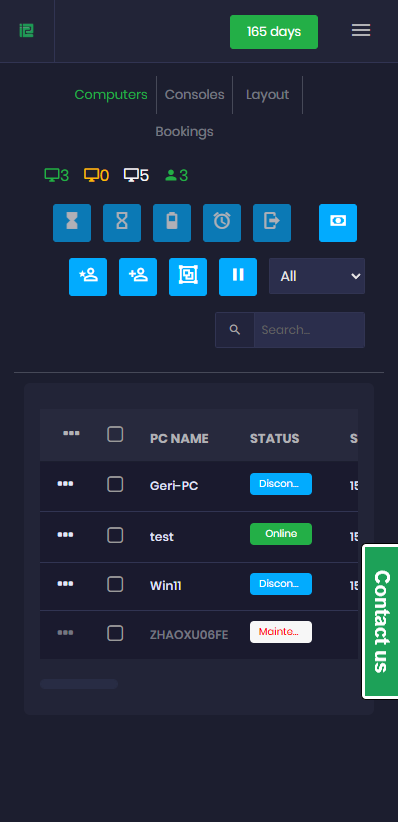
Each client machine becomes remotely controllable through the dashboard. Restart, software push, screen lock, active application monitoring — all without leaving the console. For a single operator running a 40-seat cafe without dedicated technical staff, this is the difference between owning the floor and being owned by it.
Application whitelisting and blacklisting is included. You define what customers can access. Relevant for gaming-focused cafes, relevant for productivity environments, relevant for anyone who's watched a customer install something they absolutely should not have installed. (And if you've run a cafe for more than three months, you've watched that happen.)
Member Accounts and Prepaid Management
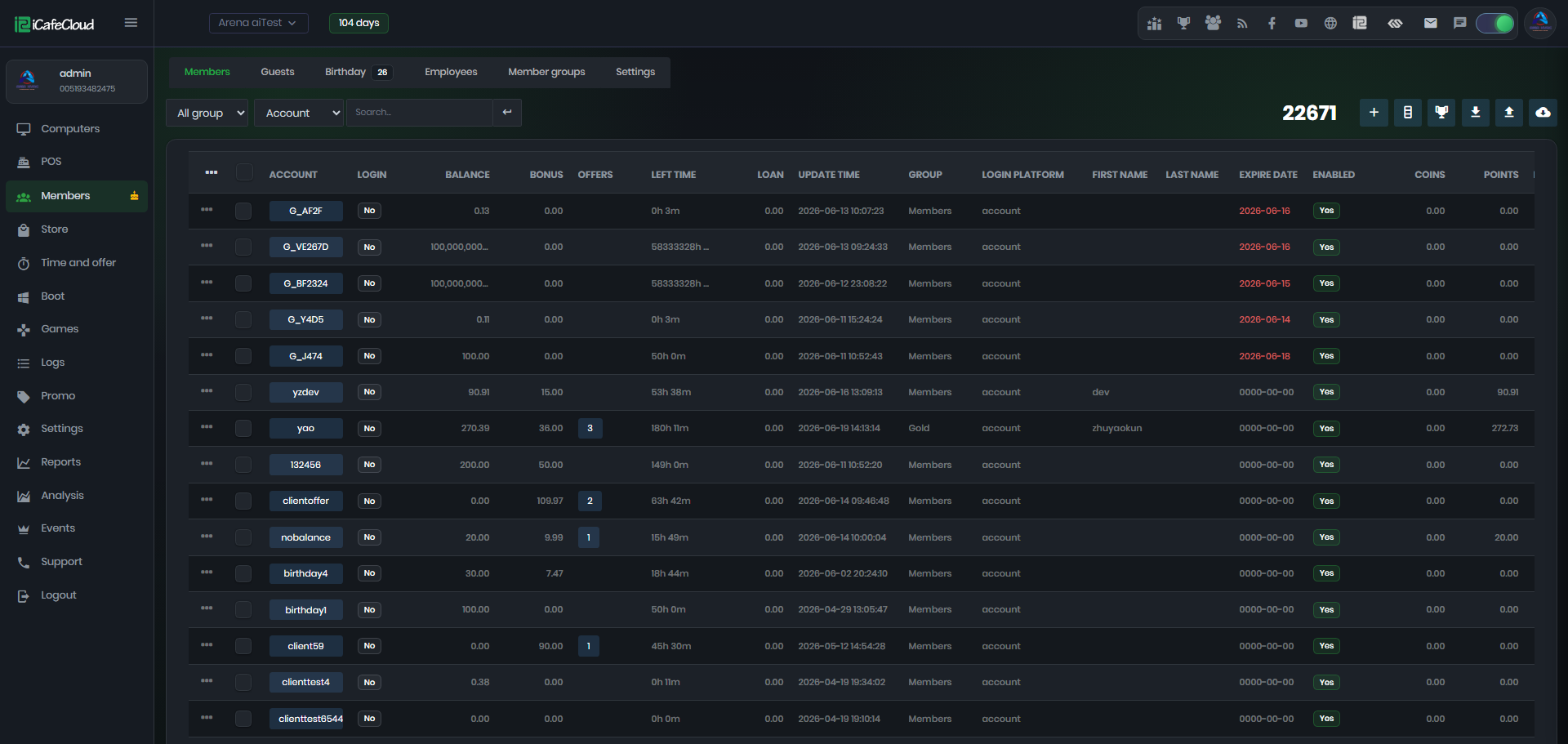
Prepaid card generation is built in — physical cards with unique codes, digital codes, both redeemable at login. The front desk top-up interface is fast, which matters when there's a queue. iCafeCloud doesn't require third-party card management software to handle this, which is one fewer integration to maintain.
Loyalty points, member-only pricing tiers, prepaid balance management — it's a thorough system. Nothing here is surprising for the category, but the implementation doesn't create friction. And that's worth something.
How Does iCafeCloud Compare to Antamedia?
Antamedia is the most direct competitor. Feature overlap is substantial: billing, session control, member management. The real differences are architectural, not feature-list deep.
Antamedia requires on-site server installation. Full stop. For a single-location operator with stable IT infrastructure and someone on staff who knows what they're doing, this is manageable. For operators who want to manage remotely, who are scaling to additional locations, or who simply don't have dedicated IT staff — the on-site server dependency is a maintenance liability that compounds over time. Think of it like owning a car versus using a fleet service: one gives you more control over the specific machine, the other eliminates a whole category of maintenance headaches.
iCafeCloud's cloud architecture eliminates that dependency. That's the core trade.
Antamedia's advantage, and it's a real one: a longer history means a more thorough library of documented edge-case configurations. Operators with complex legacy setups may find Antamedia's documentation more useful for the weird stuff. iCafeCloud wins on initial deployment speed and ongoing remote management. Antamedia wins on depth of documented corner cases.
I'm honestly not sure that distinction matters to most operators. Take this with a grain of salt if your environment is relatively standard.
Pricing
Subscription model, seat-based. Smaller cafes pay less than large gaming centers. Standard for the category.
The more interesting comparison is total cost of ownership over time. Perpetual-license competitors charge separately for major version upgrades. On a three-year horizon, subscription-based internet cafe sweepstakes software tends to come out ahead for operations that want to stay current. The math shifts if you're comfortable running older software versions indefinitely — but in my experience, most operators aren't. Your mileage may vary.
Who Should Actually Buy This
Multi-location operators. Full stop, this is the clearest fit. The cloud architecture and unified dashboard were built for exactly this scenario.
Single-location operators running stable setups with existing on-site server infrastructure and dedicated IT staff — honestly, take a harder look at Antamedia before committing. If you've already invested in configuration and staff training on a legacy platform and you're not planning to scale, switching costs are real.
But if you're starting fresh, scaling, or managing remotely: iCafeCloud is the easier path.
The Verdict
iCafeCloud does what it says. The billing engine is accurate, the multi-branch management is a genuine differentiator, and the cloud-first architecture matters in ways that compound as an operation grows. It's not the cheapest internet cafe sweepstakes software option and it's not the right fit for every operator — single-location setups with existing infrastructure may find it more platform than they need.
For growing operations, multi-location businesses, and anyone who wants to stop maintaining on-site servers: this is a well-built, purpose-designed tool. From what I can tell, nothing else in the category handles the multi-branch management problem this cleanly. Evaluate it seriously.
Frequently Asked Questions
What exactly is internet cafe sweepstakes software, and where does iCafeCloud fit in?
Internet cafe sweepstakes software is a broad term for platforms that manage customer access, session billing, and related operations in cafe environments. iCafeCloud is a cloud-based internet cafe management platform — it handles billing, session control, and member management for cafe operators specifically.
Can iCafeCloud actually manage multiple locations from one account, or is that a marketing claim?
It's real. Multi-branch management is one of iCafeCloud's primary differentiators. Live seat occupancy, revenue, and active sessions across all locations from a single cloud dashboard — no separate logins per branch required.
How does the billing system handle prepaid accounts?
iCafeCloud supports prepaid member accounts with balance top-ups, physical and digital prepaid card generation, and automatic session termination when a balance runs out. Billing accuracy is calculated to the minute across time-based, package-based, and data-volume-based billing modes.
I only have 25 seats. Is iCafeCloud overkill?
Maybe. The seat-based subscription pricing scales down for smaller operations, so cost isn't necessarily the issue. But if multi-location management and remote administration aren't priorities for you, there are simpler alternatives worth comparing before you commit.
What's the real difference between iCafeCloud and on-premise software like Antamedia?
Infrastructure dependency. On-premise platforms require local server installation and ongoing maintenance. iCafeCloud's cloud architecture eliminates on-site server requirements, handles updates automatically, and makes remote management straightforward — advantages that become more significant the more locations you're running.