

A lean gaming cafe in the United States starts near $85,000. A full esports venue with a tournament stage and food service passes $435,000. Both figures come from business-plan templates and operator budgets published in 2025 and 2026, and the gap is not inflation. It is seat count, the condition of the room, and the tier of hardware on the floor.
The practical answer to "how much does it cost to start a gaming cafe" depends on a specific room, not an industry average. What follows is a planning model built from those published ranges, split into the money spent once, the money spent every month, and the cash that has to sit in the bank before either starts.
Three variables explain almost every quote
Most published totals become useful once three variables are fixed.
The first is seat count. A 20-seat room and a 60-seat room share the same counter, signage, network core and permit process, so cost per seat falls as the floor grows. The lean end of the published range covers a 12 to 16 station room. The high end covers 24 to 30 stations, a tournament stage and some form of food service. The equipment line does not fall with it. Every seat needs a PC, a monitor, a keyboard, a mouse and a headset.
The second is the condition of the space. A former restaurant with three-phase power and drainage, plus an existing fit-out, costs less to convert than a bare retail shell. Electrical capacity and cooling are the two items that most often push a build-out from the low end of a range to the high end. Twenty gaming PCs plus monitors can pull more power than the previous tenant did, and the air conditioning has to remove that heat through a full day of operation.
The third is the hardware tier. A venue built around current mid-range gaming PCs, high-refresh monitors and durable peripherals sits in a different budget from one built around premium components and 240Hz displays. The difference is felt twice, at purchase and at the next refresh.
Those three variables produce a classification used through the rest of this article:
· Lean lounge. 12 to 20 seats, standard fit-out, mid-range hardware, limited food.
· Standard LAN center. 20 to 40 seats, dedicated gaming floor, better peripherals, membership program.
· Full esports venue. 40 or more seats, tournament stage, broadcast positions, full food service.
In the United States these businesses are usually called gaming centers, LAN centers or esports lounges. "Internet cafe" still appears in search, but it describes an older format with less hardware per seat. The 20-seat model in the next section sits in the standard LAN center category.
The one-time side of the budget
The table below models a standard 20-seat LAN center in a leased space. It assumes a mid-range hardware tier, no kitchen equipment, and a room that needs a fit-out but not a full structural rebuild. Figures are planning ranges in US dollars, not quotes.
Line item | Low | High | What moves it |
Build-out, | $25,000 | $55,000 | Condition of the |
Furniture and pods | $20,000 | $30,000 | Roughly $1,000 to |
PCs, monitors, | $36,000 | $60,000 | $1,800 to $3,000 |
Network and | $8,000 | $18,000 | Fiber install, |
Licenses and | $3,000 | $15,000 | City and state |
Deposit, signage, | $8,000 | $20,000 | Two to three |
One-time subtotal | $100,000 | $198,000 |
|
Working capital | $30,000 | $70,000 | Four to six months |
Cash needed | $130,000 | $268,000 |
|
Build-out is the line that varies most between two rooms of the same size. A retail unit that already has enough electrical service and a working HVAC system can be converted for a fraction of what a bare shell costs. An older building may need a panel upgrade, additional circuits, dedicated cooling for the gaming floor, and network cabling pulled to every seat. Those items are invisible in photographs and expensive in invoices.
Furniture is more than desks. Gaming chairs wear out, monitor arms fail, and cable management has to survive daily use. Budgeting $1,000 to $1,500 per seat is a reasonable planning figure for durable commercial furniture, not a premium pod.
The hardware line is the easiest to price and the easiest to underestimate. At $1,800 to $3,000 per station, a 20-seat floor carries $36,000 to $60,000 in PCs, monitors and peripherals before a single game is installed. The top of that range buys current mid-range GPUs, high-refresh monitors and peripherals that can take abuse. The bottom buys a workable machine with less headroom for the next few years of game releases.
Network and server costs depend on how the floor is built. A conventional setup uses one managed switch and cabling, plus a small server for management. A diskless setup trades local storage in each PC for a central image: the client machines boot from the server, and a game update is applied once instead of 20 times. CCBoot is the diskless boot product in the same family, and the setup wiki covers the network requirements. Either approach works. The choice belongs in the budget, not in a later upgrade.
Permits and deposits, plus opening stock, are small relative to hardware, but they arrive before revenue. A lease usually requires the first month, the last month and a security deposit. Signage and initial supplies, plus opening marketing, sit in the same window.
One more line belongs in the one-time subtotal even though it is not a purchase: contingency. Permit delays, a panel upgrade discovered during demolition, or a cooling unit that fails in the first summer are ordinary. A 10% to 15% contingency on the build subtotal is standard practice in commercial fit-outs. On a $100,000 to $198,000 build, that is $10,000 to $30,000 held back rather than spent.
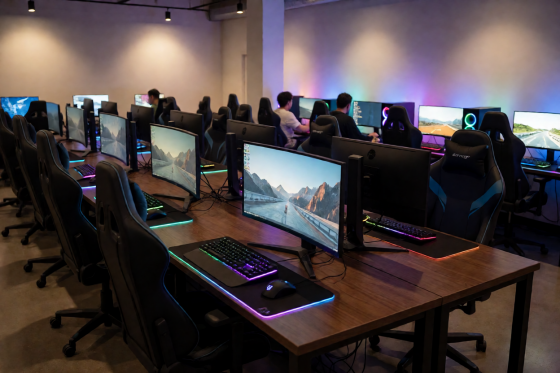
Rows of gaming PCs and peripherals in a North American gaming center
The monthly side of the budget
A 20-seat room does not stop costing money once the PCs are on the desks. The table below shows the fixed monthly lines for the same venue.
Line item | Low | High | What moves it |
Rent | $3,000 | $9,000 | Metro, square |
Power and cooling | $800 | $2,000 | Hardware load, |
Business internet | $150 | $400 | Fiber availability |
Labor | $4,000 | $10,000 | One full-time |
Software licenses | Per PC | Per PC | Billed per PC per |
Hardware refresh | $1,000 | $2,500 | See the refresh |
Insurance, cleaning, | $500 | $1,500 | Local rates and |
Total before | $9,450 | $25,400 |
|
The range is wide because rent and labor dominate it. In a low-cost metro, a 20-seat room can run near $10,000 a month before software. In a high-cost city, the same floor can pass $25,000. That works out to roughly $475 to $1,270 per seat per month, again before software.
Software is billed per PC rather than as a share of revenue. That matters for planning: the line scales with the size of the floor, not with how busy the floor is. Current per-PC pricing is published by the vendor, so the number can be plugged into the model at the current rate rather than guessed.
Labor deserves its own note. A 20-seat room can be covered by one attendant on a weekday and a second person on weekend nights. A 40-seat room needs more coverage, and a venue with food service needs someone who can run a kitchen. The labor line does not scale linearly with seats, which is one reason larger rooms can carry a lower cost per seat.
The same budget at three sizes: 20, 40, 60 seats
The three sizes below use the same assumptions as the 20-seat table: standard fit-out, mid-range hardware, no kitchen equipment, leased space.
| 20 seats | 40 seats | 60 seats |
Build-out and | 45,000-85,000 | 85,000-160,000 | 120,000-225,000 |
PCs and | 36,000-60,000 | 72,000-120,000 | 108,000-180,000 |
Network and | 8,000-18,000 | 15,000-30,000 | 22,000-45,000 |
Permits, deposit, | 11,000-35,000 | 20,000-50,000 | 30,000-70,000 |
One-time subtotal | 100,000-198,000 | 192,000-360,000 | 280,000-520,000 |
Working capital | 30,000-70,000 | 55,000-110,000 | 80,000-150,000 |
Cash needed | 130,000-268,000 | 247,000-470,000 | 360,000-670,000 |
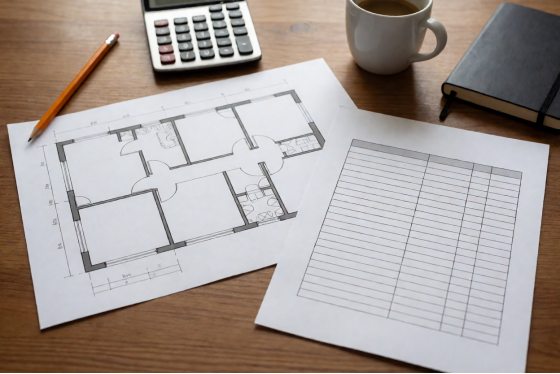
Floor plan and budget worksheet for a gaming cafe build-out
Build cost per seat falls as the room grows. A 20-seat room carries the full cost of the counter, the network core, the signage and the permit process across 20 stations. A 60-seat room spreads those items across 60. The hardware line per seat stays roughly flat, because every station still needs a PC and peripherals.
The cash requirement moves the other way. A 60-seat venue needs more than twice the opening cash of a 20-seat venue, and most of the extra sits in hardware and working capital. That is the practical reason many first venues open at 20 to 30 seats and expand after the first year of demand data.
The monthly fixed cost also rises, but more slowly than seat count. Rent per seat usually falls because a larger room can use its square footage more efficiently. Labor per seat falls for the same reason. Power and software rise with the number of PCs.
The line most budgets get wrong
Working capital is the line that separates a plan that survives opening month from one that does not.
A new venue spends on build-out and hardware, plus deposits, for months before the first customer pays. Rent and payroll start before revenue, and so do insurance and utilities. Published planning guides generally recommend four to six months of fixed costs in reserve, and that figure is not padding. It covers the ramp from opening night to a stable weekly rhythm, the first hardware failures, and the slow weeks that follow a strong launch.
The common planning error is not overspending on PCs. It is treating the one-time subtotal as the whole budget. A 20-seat room that spends $180,000 on build-out and leaves $20,000 in the bank has a cash problem before it has a demand problem. The same room with $130,000 in build costs and $60,000 in reserve has room to adjust pricing and staffing, plus promotions, after the first month of real data.
Hardware refresh belongs in the monthly column
Gaming hardware has a replacement cycle, and the cycle is shorter than the lease on most retail spaces. Operator budgets and bookkeeping guides published in 2026 put the refresh interval at 24 to 36 months for a competitive gaming floor. A 30-PC fleet is often modeled with a sinking fund near $3,000 a month, which is roughly $100 per PC per month.
A 20-seat room at the same rate needs $1,500 to $2,500 a month set aside. That money is not optional in a venue that competes on frame rates. A PC that was mid-range at opening is a disadvantage two years later, and a monitor that was fast at opening is ordinary.
Utilization decides whether the fund is affordable. Published operator benchmarks put weekday seat utilization at 30% to 40% and weekend utilization at 60% to 80%, with a blended figure around 35% to 45%. A room below 30% blended utilization is not generating enough seat hours to fund its own refresh, which is why the refresh line belongs in the monthly budget from the first month rather than in a future capital call.
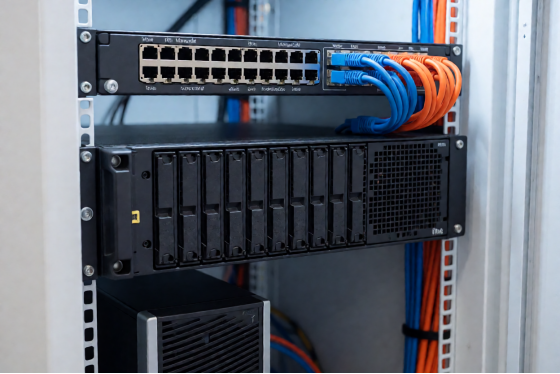
Network cabinet with switches and cabling for a LAN center
Software is a small line that changes the rest
Management software is one of the smallest lines in the monthly table, and it touches several of the larger ones.
The category covers member accounts and session timing, a shared pool of game licenses, PC control and console control from an admin panel, daily earnings reports, top-up discounts and loyalty rewards. iCafeCloud is one example of this kind of internet cafe software. The feature list maps those functions to the daily work of a venue: starting and ending sessions, locking a machine when time runs out, assigning a game license for the length of a session, and pulling a report at the end of a shift.
The license pool is the part with a direct effect on the budget. Buying a copy of a game for every seat means paying for peak capacity that sits idle most of the week. A pool sized to concurrent demand covers the busy hours without covering every chair at all times. iCafeCloud assigns a license for the length of a session and returns it to the pool afterward, which is how a peak-load pool is operated. That changes the game budget from a per-seat number to a peak-load number, which is usually smaller.
The software also changes the labor line. One attendant can cover a 20- to 40-seat floor when sessions and time limits are handled from a single panel, along with restarts and account top-ups. Without that, the same floor needs a second person at the counter, and the monthly labor range moves toward its high end.
iCafeCloud reports more than 3,000 clients in over 90 countries, with 24/7 support. A trial license covers 10 or more PCs for 15 days and can be extended to 30, and it can be requested through the trial page. The trial server requirements are at least 16GB of memory and four physical disks, which is worth checking before the trial starts.
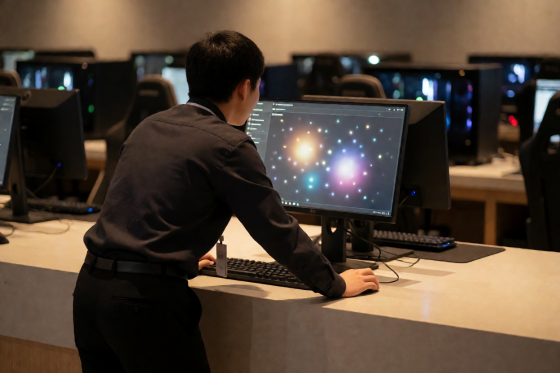
Front desk and membership counter at a gaming cafe
How much does it cost to start a gaming cafe: the numbers to remember
For planning purposes, the US ranges in this article come down to three numbers: build cost, monthly fixed cost, and cash in reserve.
A 20-seat standard LAN center needs roughly $100,000 to $198,000 for build and equipment, plus $30,000 to $70,000 in working capital. Monthly fixed costs run about $9,500 to $25,400 before software. A 40-seat room needs $192,000 to $360,000 for build and equipment, plus $55,000 to $110,000 in reserve. A 60-seat room needs $280,000 to $520,000, plus $80,000 to $150,000.
Those ranges are planning figures assembled from published 2025 and 2026 budgets, not quotes. Metro-level rent, the condition of a specific building and the hardware tier can move a 20-seat budget by more than the choice between one software vendor and another. The ranges are most useful as a check on a business plan, not as a substitute for three contractor quotes and a lease review.
· Seat count, room condition and hardware tier explain most of the difference between published totals.
· Build cost per seat falls as the floor grows. Cash requirement rises faster than seat count.
· Working capital of four to six months of fixed costs is a budget line, not a cushion.
· Hardware refresh of roughly $100 per PC per month keeps the floor competitive without a future capital call.
· Software is billed per PC, and a license pool sized to concurrent demand costs less than one copy per seat.
How much does it cost to start a gaming cafe? For a 20-seat US room, the practical answer is $130,000 to $268,000 before opening, with $9,500 to $25,400 a month in fixed costs afterward. The exact number depends on the room. The structure of the budget does not.