

A gaming cafe's PCs can offer the same game library while drawing licenses from a shared pool. A customer launches a game, uses an available license, and returns it to the pool when finished. The next player can then use that license at another station.
That cycle is the starting point for internet cafe game license management. For a LAN center offering several paid titles, it also changes the purchasing question: how many people will play each game at the same time?
Where internet cafe game license management fits
Game files, permission to offer a game, and the software that manages a customer session each have a job. Keeping those jobs clear makes planning easier.
The installed files let a station load the game. The appropriate commercial game license provides the permission offered through the publisher's or platform's venue program. A license pool organizes available copies so customers can use them during play.
For a Steam example, the official PC Café setup documentation describes commercial licenses purchased through a master account and temporarily checked out by visitors. That is an example of how a platform provides commercial game access.
iCafeCloud internet cafe management software handles the venue's shared game license pool alongside member accounts and session billing. Its software subscription is planned around the number of client PCs, while the demand for each game depends on who plays it and when. Those two quantities belong on separate lines in your planning notes.
From the pool to a player, and back
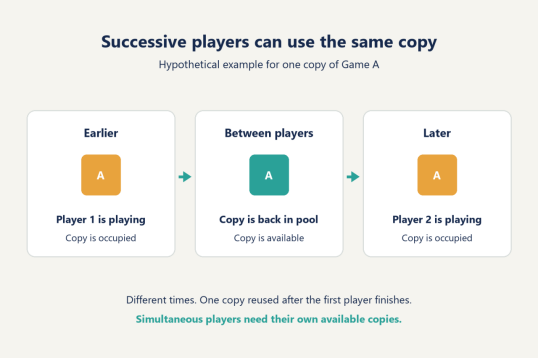
The reason for a shared pool is reuse across successive players. A license can serve one customer, return to availability, and then serve someone else. Keeping the copy available between uses gives the venue a resource that can move with demand across its stations.
In iCafeCloud, the documented sequence begins when a customer starts a session and launches a game. The system assigns a license for the duration of use. When the customer is done, the license goes back into the pool for the next player. The game license management features sit within the same product as the cafe's customer and session controls.
It helps to follow a single copy through that sequence. Consider this hypothetical example: Game A has four appropriately licensed copies in the venue's pool. Nobody is playing it yet, so all four are available. Several customers may be using other games or sitting at stations, but those activities do not create demand for Game A's copies.
A player launches the game
The first customer starts Game A during a session. One copy is assigned for that player's use, leaving three available in the example. The count has changed because the customer launched this particular game.
Assignment follows the game being used. When staff explain the service to customers, the useful point is that the venue offers access to a pool of copies across its PCs. Each player's time with the game occupies one of those copies for that period.
Keep the example's four-copy quantity tied to Game A throughout the explanation. If another customer chooses Game B, assess that customer's access against Game B's available copies. This is why a planning sheet needs a row for each title, even when every station presents customers with the same game menu. The menu describes the choice. The pool supplies the copies being used.
The copy stays in use during play
Suppose three more customers launch Game A while the first customer is still playing. The example now has four players using four copies simultaneously. Those copies are occupied.
This is the moment that matters for capacity planning. The room might contain many other PCs, and the game might have served many more customers earlier in the day, but the current group needs four copies together. When a planned group session calls for more simultaneous players, prepare the matching number of appropriate copies before the event.
The player finishes and the copy returns
Once a customer finishes using the game, the assigned license returns to the pool. In our example, that makes one copy available again. A later customer can use it at a different station without adding another copy solely because the station has changed.
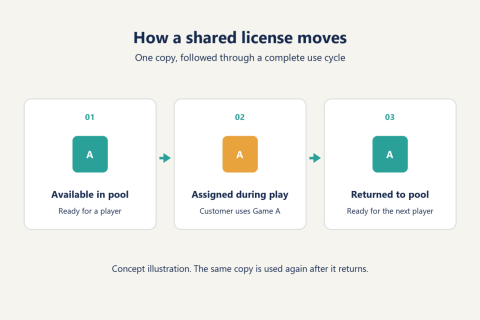
The important distinction is between reuse over time and simultaneous use. Ten customers arriving in succession create a different requirement from ten customers expecting to play together. Thinking through the full cycle makes that difference visible before you decide how many copies to offer.
Plan copies around simultaneous demand
Start with one game. Record the largest number of customers who want to play it together during a relevant period, then consider any upcoming activity likely to change that demand. Repeat the exercise for the other paid titles on your menu.
The following is a hypothetical planning example for a 30-PC venue. The figures illustrate the counting method; they are not customer results or a recommended purchase quantity for every cafe.
Planning measure | Game A | Game B |
PCs in the venue | 30 | 30 |
Customers playing the title over the whole day | 18 | 9 |
Highest simultaneous player count that day | 4 | 3 |
Players expected together for a planned event | 8 | No event planned |
For Game A, four copies cover the example's observed peak of four simultaneous players. The planned eight-player event creates a separate requirement for eight appropriate copies at once. Eighteen customers over the day describe total use across successive sessions. They do not, by themselves, tell you the required pool size.
Game B needs its own assessment. A copy assigned to Game A supports that title; plan each game's supply against its own demand. A single total for the whole library hides the information you need when a group chooses one particular game.
Make observations during periods that matter to your venue. A quiet afternoon gives a useful record of that afternoon, while an evening group booking answers a different question. Write the period beside the count. When you later compare demand, those notes explain whether the change came from more customers overall or from more customers choosing the same title together.
For a new title, you may have advance bookings or customer requests before you have much usage history. Use those as planning inputs and review the quantity as actual demand becomes clearer. Keep ordinary sessions and organized events visible in your notes, because a group booking can concentrate demand on a title that is usually quiet.
Leave room for your own service policy, too. If immediate access to a particular game is part of the experience you promise, plan the available copies around that promise. Record why you chose the quantity so the next review has a clear starting point.
Keep game access connected to the customer session
A customer experiences a visit as one continuous session: arrive, log in, choose a game, play, and finish. Pool management fits into that visit at the point where the customer uses a game.
iCafeCloud tracks the member account and the session. Timing starts when the customer logs in, stops when the session ends, and the charge is calculated. Staff can also start or end sessions from the admin panel. These functions give the operator control over the visit while the shared pool handles the allocation and return of game licenses.
For planning, write down both the customer flow and the games you intend to offer. Include a customer who plays one title and leaves, then a later customer who chooses the same title. Add a group that wants to play together. Those examples connect the pool's reuse cycle to the service your staff will explain.
You can request an iCafeCloud trial to explore the venue workflow with your own intended use. For the management software subscription, refer to the current per-PC subscription options. Keep the software subscription and your game-copy purchasing plan separate when preparing the budget.
The same library, ready for the next player
After a busy period, the useful question is whether each title had enough copies for the people who wanted to play together. A full room alone cannot answer it. The mix of games and the overlap between players supply the detail.
Use that information to revise individual quantities as your bookings and game choices change. Keep the original reason for each purchase beside the updated demand, so a popular event does not become an unexplained permanent assumption about daily use.
Good internet cafe game license management follows a copy through its whole working cycle. iCafeCloud assigns it when a customer launches the game and returns it after use. The next customer can then choose that title from the same library, with an available copy ready for another period of play.