

A larger discount does not automatically give members a clearer reason to return. A regular player still needs to understand what earns a reward, what the reward gives them, and when they can use it.
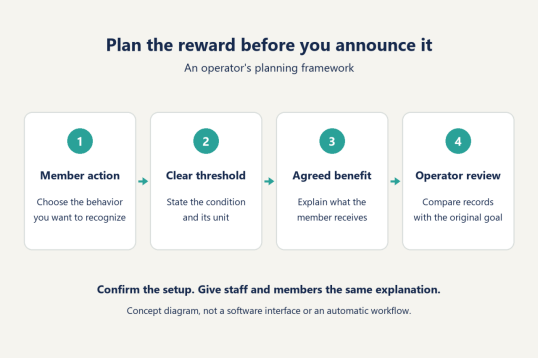
I'd plan an internet cafe member loyalty program around that explanation first. For a gaming center or LAN center, the useful starting point is a recorded member action: a top-up, accumulated playing time, or game performance linked to a prize. Pick the behavior you want to recognize, then work out the promise your staff will make.
1. Give your internet cafe member loyalty program one goal
Write the goal in a sentence you can review later. "Reward regular customers" leaves too much open. "Recognize members who accumulate playing time and review whether they return during the following period" tells you what to record.
Choose an initial focus:
· Recognize continued play through a cumulative-hours threshold.
· Recognize account top-ups through a clearly defined spending threshold.
· Give interested players a game-performance reward to work toward.
You can develop the program as you learn what members use. At the planning stage, one clear focus makes the first explanation easier and gives your review something specific to examine.
Start with the member account. iCafeCloud member and session management keeps a record of customer sessions, with timing beginning at login and charges calculated when the session ends. Those everyday records give the loyalty plan a connection to what a member does at your venue.
Keep the goal beside the proposed rule. When someone suggests another perk, check whether it serves the same purpose or belongs in a later plan. This gives the conversation a useful stopping point before a simple reward becomes several unrelated offers.
2. Match the reward to a recorded member action
The action and the benefit need to fit together. Someone who tops up an account has added funds. Someone who reaches a playing-time threshold has accumulated use. A player earning coins through game performance is doing something else again. Each needs an explanation of its own.
iCafeCloud supports automatic discounts based on how much a customer has topped up or how many hours they have logged, with thresholds set by the operator. Its Coin Prizes feature lets players earn coins from in-game performance, while the operator chooses the prizes and their coin requirements. These are the documented member rewards and loyalty features to build the plan around.
Top-ups: define the qualifying amount
For a top-up reward, decide what the customer must add and what benefit follows. The amount credited to their account, the qualifying rule, and the reward should each be easy to identify in your written explanation.
A top-up also needs its own line in your review notes. Money added to an account and time already played describe different activity. If you want to understand repeat visits, record those visits as well rather than treating the top-up alone as the answer.
Playing time: recognize accumulated use
A cumulative-hours rule connects the reward to time the member has logged. It can suit an operator who wants regular players to see a benefit from continued use of the venue.
Describe the threshold in hours and explain the benefit in ordinary language. Members should be able to ask how the rule applies to them and receive the same answer at any shift. Before publishing details about when a new benefit takes effect, confirm the current configuration with support.
Game performance: give coins a clear purpose
Coin Prizes creates a separate reward path. Specify the prize and its coin requirement, and confirm the applicable games and setup before you announce the activity. That keeps the advertised challenge connected to the experience you will provide.
Keep the distinction visible. A prize expressed in coins should have a description of how those coins are earned and what they can be exchanged for, so staff can explain it alongside a member's other benefits.
Reward basis | Record to check | What the member needs to understand |
Account top-up | The qualifying top-up activity | The threshold and the benefit it earns |
Accumulated playing time | The member's logged hours | The hours required and when the benefit applies |
In-game performance | The applicable coin-earning activity | The relevant game, the prize and its coin requirement |
Use this table as a planning worksheet. Complete the row for the reward you intend to offer, then confirm its configuration. If your plan includes another reward path, give it a separate row so the member promise stays readable.
3. Set a threshold you can explain
A threshold needs a unit. "Play more" is vague. "Reach 20 accumulated hours" gives the member a condition they can understand. The 20-hour figure here is a hypothetical planning example, not a recommended setting for every venue.
Work through that example before deciding on the number. Consider members with different visit patterns: one might play short sessions across several visits, while another spends longer at the venue each time. A cumulative-hours rule recognizes the total time. Your goal may also require you to observe how often those visits happen.
Write down:
· The recorded activity and its unit, such as accumulated hours.
· The threshold the member must reach.
· The benefit you intend to provide once the condition is met.
Then check the timing of the promise. Staff need an agreed explanation of how the configured rule applies when a member qualifies. Take that question to support while preparing the plan, before turning a draft sentence into an advertised offer.
The same discipline applies to a top-up rule. State the qualifying condition precisely and keep the record used to assess it consistent with the wording customers see. A member should not have to guess which activity counts toward a reward.
If a proposed threshold seems difficult to explain, revise the rule first. Adding a longer poster usually leaves the difficult part in place. The rule should survive a short conversation at the counter.
4. Write the member promise before announcing it
Write the rule first.
The customer-facing version should cover the questions someone would reasonably ask before taking part. A staff member can use this short checklist while reviewing the wording:
· Who is eligible for this reward?
· What action counts toward it?
· What benefit does the member receive?
· When and where does that benefit apply?
These are questions for your operating plan. Match each answer to the configuration you have confirmed. For a coin prize, include the prize description and its coin requirement. For a time-based discount, make the qualifying hours and the applicable benefit clear.
Consider a hypothetical draft that says, "Regular players get better rates." It leaves the member to decide what "regular" means. A more useful draft identifies the accumulated-hours threshold and describes the benefit that follows. Fill in the confirmed details before publishing it.
Read the promise aloud to someone who did not help write it. Ask them to explain how they would qualify. Their answer tells you which parts of your wording need attention, without requiring a lengthy launch campaign.
Keep a dated copy of the wording staff will use. If you later change the program, that copy helps you understand what members were told during the period you are reviewing.
5. Give every shift the same explanation
The front counter is where the written promise becomes a conversation. Staff should be able to identify the relevant member record, explain the qualifying condition, and describe the agreed benefit without improvising a different offer for each visitor.
I would prepare one short staff note alongside the customer wording. Include the confirmed rule, where staff should verify eligibility, and who handles a question that needs checking. Keep any unresolved question with that note until the answer is confirmed, then update the shared explanation.
For a venue with several shifts, give the note an owner and a review date. That is an operating habit you control. It helps the opening and closing teams explain the same program even when the person who designed it is away.
iCafeCloud's operator-set thresholds and automatic discounts support this consistent approach. Staff can spend the conversation explaining the reward rather than deciding a new discount at the counter. For Coin Prizes, keep the current prize description and coin requirement available to the people answering member questions.

You can request an iCafeCloud trial to explore how the member workflow fits your venue. Budget for the management software using the current per-PC subscription options, and keep your proposed member benefits in a separate planning record. That makes it easier to review the reward choices independently of the software subscription.
6. Review member activity alongside the cost
Choose the review period before announcing the program. Keep notes on what happened during that period, including events or changes in opening hours that could affect member visits.
Compare periods with similar trading conditions where you can. A tournament weekend may bring a different mix of players from an ordinary weekend, even if the reward rules stay the same. Recording that context lets you describe a change in attendance more honestly.
iCafeCloud's daily reports cover earnings, expenses and member activity. Use those records as part of the review, alongside the reward details you maintain for your own plan. Useful questions include:
· Which members took part, and which returned during the review period?
· What benefits were provided, and what did the venue record against them?
· What else changed during the period that could help explain the result?
Keep the original records. If you revise the threshold later, they give you something to compare with the new rule. Note the date of the revision so activity under the two versions remains distinguishable.
A larger top-up total can be useful information, but the review should still follow the goal you wrote at the beginning. If that goal concerned repeat visits, examine repeat visits. If the plan was designed to recognize accumulated playing time, review that activity and the benefits provided. Record the outcome before proposing the next change.
7. Take a specific reward plan to support
Before announcing an internet cafe member loyalty program, bring the written rule to someone who can help confirm its setup. State the member action, the threshold, the intended benefit and the timing you plan to explain to customers.
For a playing-time reward, that means a draft with the qualifying hours and the benefit clearly filled in. For a coin prize, include the game or activity you have in mind, the prize and its coin requirement. Those details give the conversation a practical starting point.
You can discuss your reward rules with support to confirm the current way to configure them in iCafeCloud. Take the staff explanation along, too. Once the settings and the wording agree, your team has a specific member promise it can explain at the counter and review after the program begins.