
2026-03-14
qr, pay, topup, square, USA
The following guide explains how to retrieve your Square account details and connect it to iCafeCloud for QR payments in the United States.
Server side
- Create a Square account or log in if you already have one at: https://developer.squareup.com/us/en
- Once your account is ready, open iCafeCloud, navigate to Settings - QR and SMS, and select Square as the payment gateway. (Figure 1)
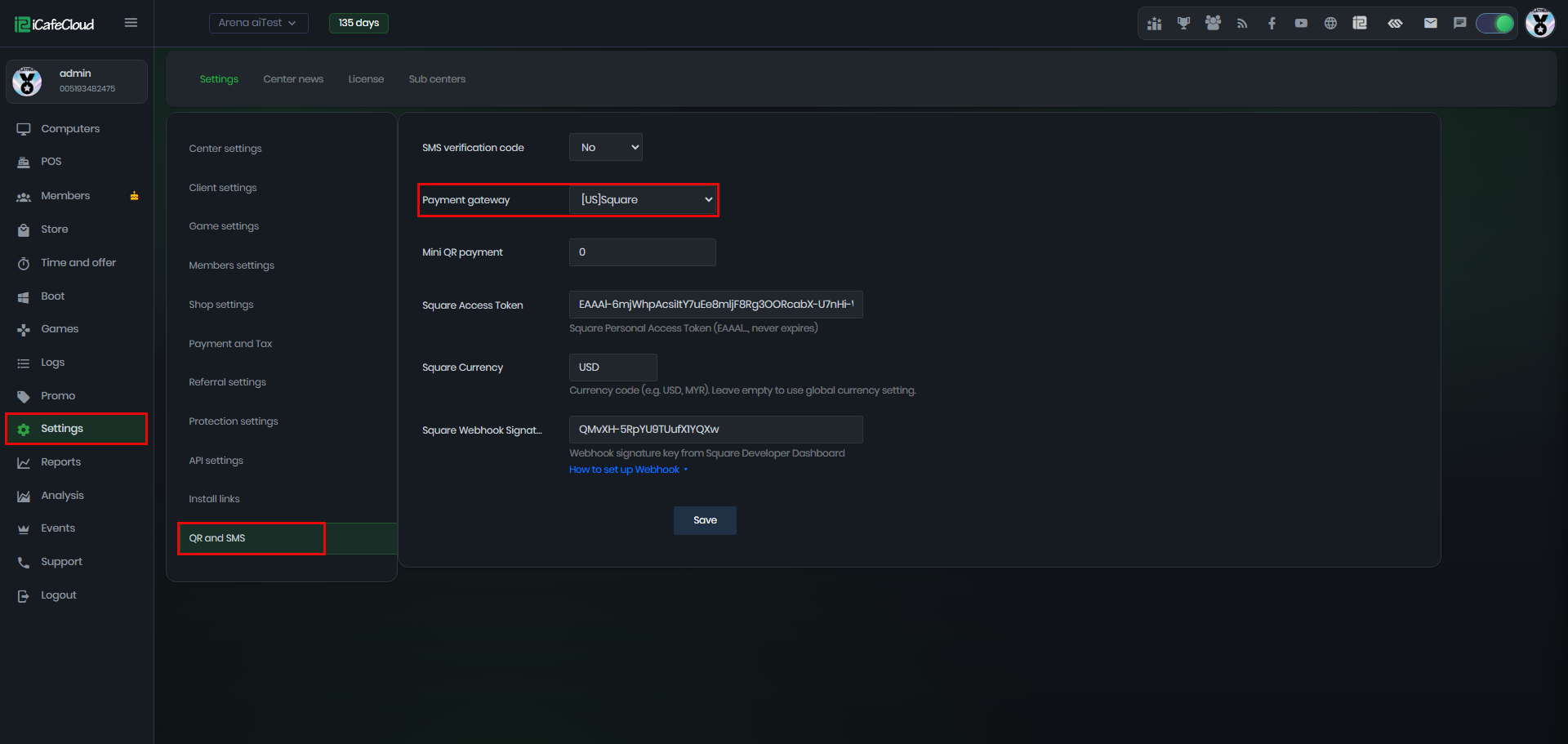
Figure 1
- To find the Square Access Token follow the steps below.(Figure 2)
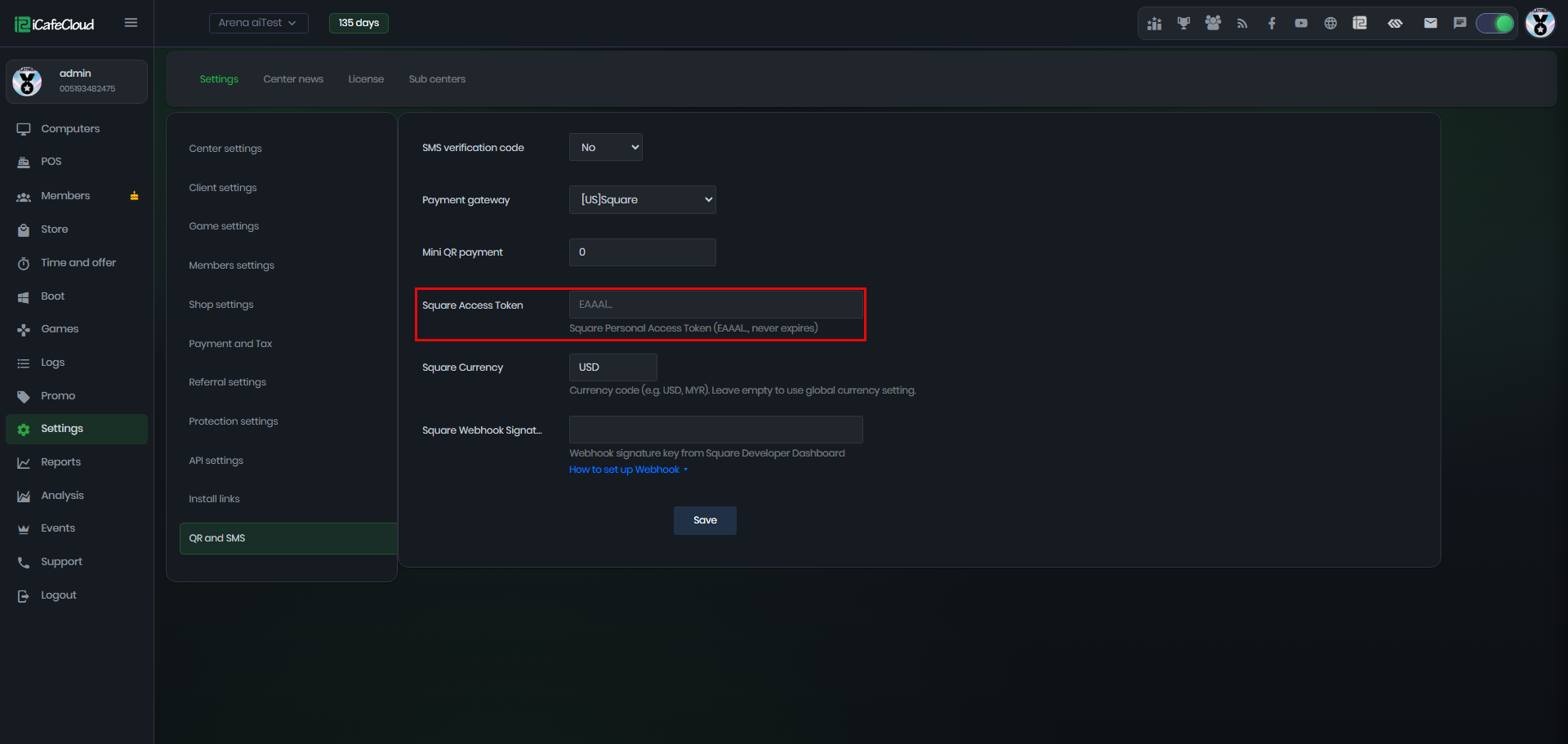
Figure 2
- First, create an application in your Square account under Applications, then click the plus (+) button. (Figure 3).
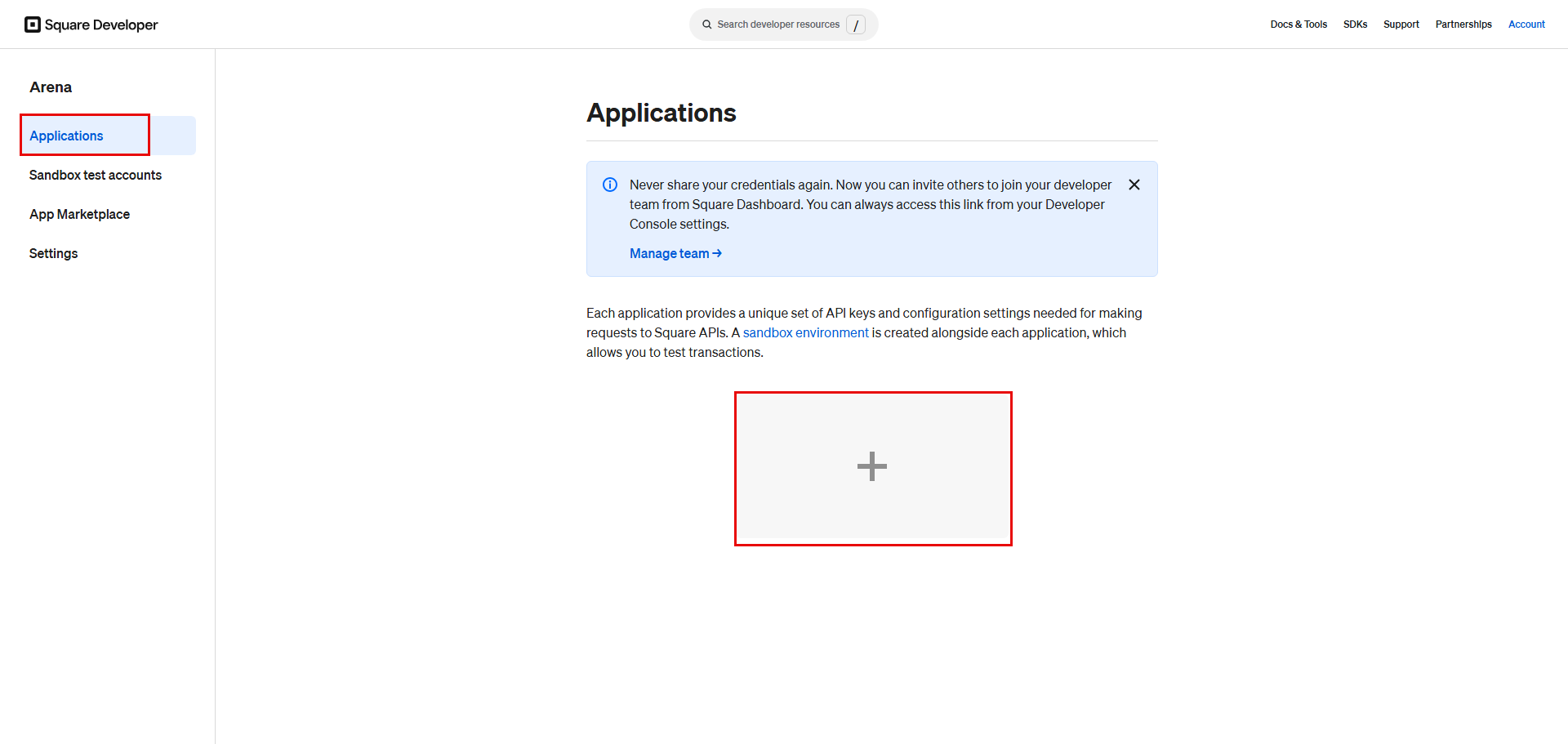
Figure 3
- Name the application based on your preference, then click ‘Next’.(Figure 4)
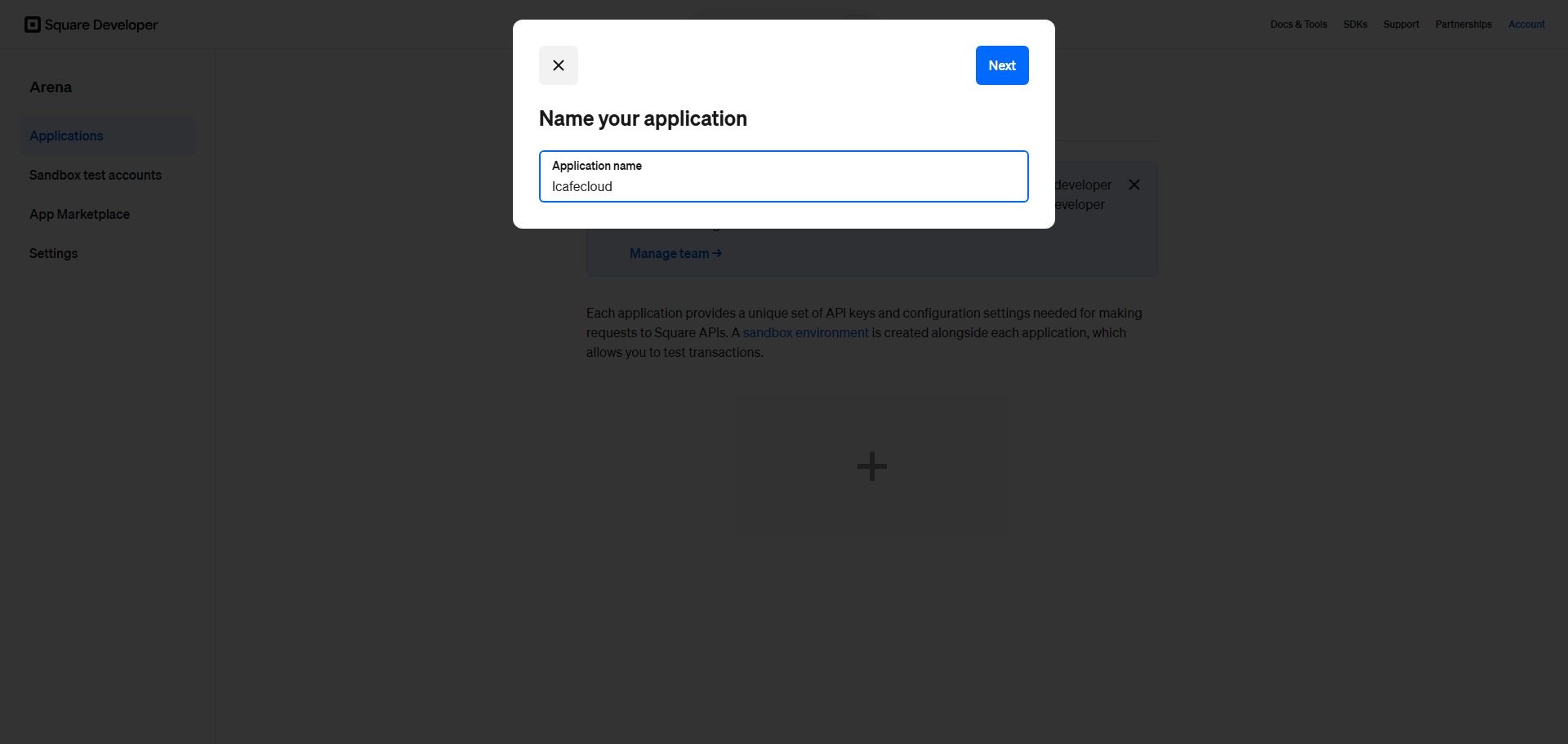
Figure 4
- Once the application is created, the Credentials page will be displayed. At the top, you will see ‘Sandbox’ and ‘Production’. Sandbox is used for testing, while Production is used for real transactions. Select ‘Production’, then you will be able to view the Application ID and Product Access Token. (Figure 5)
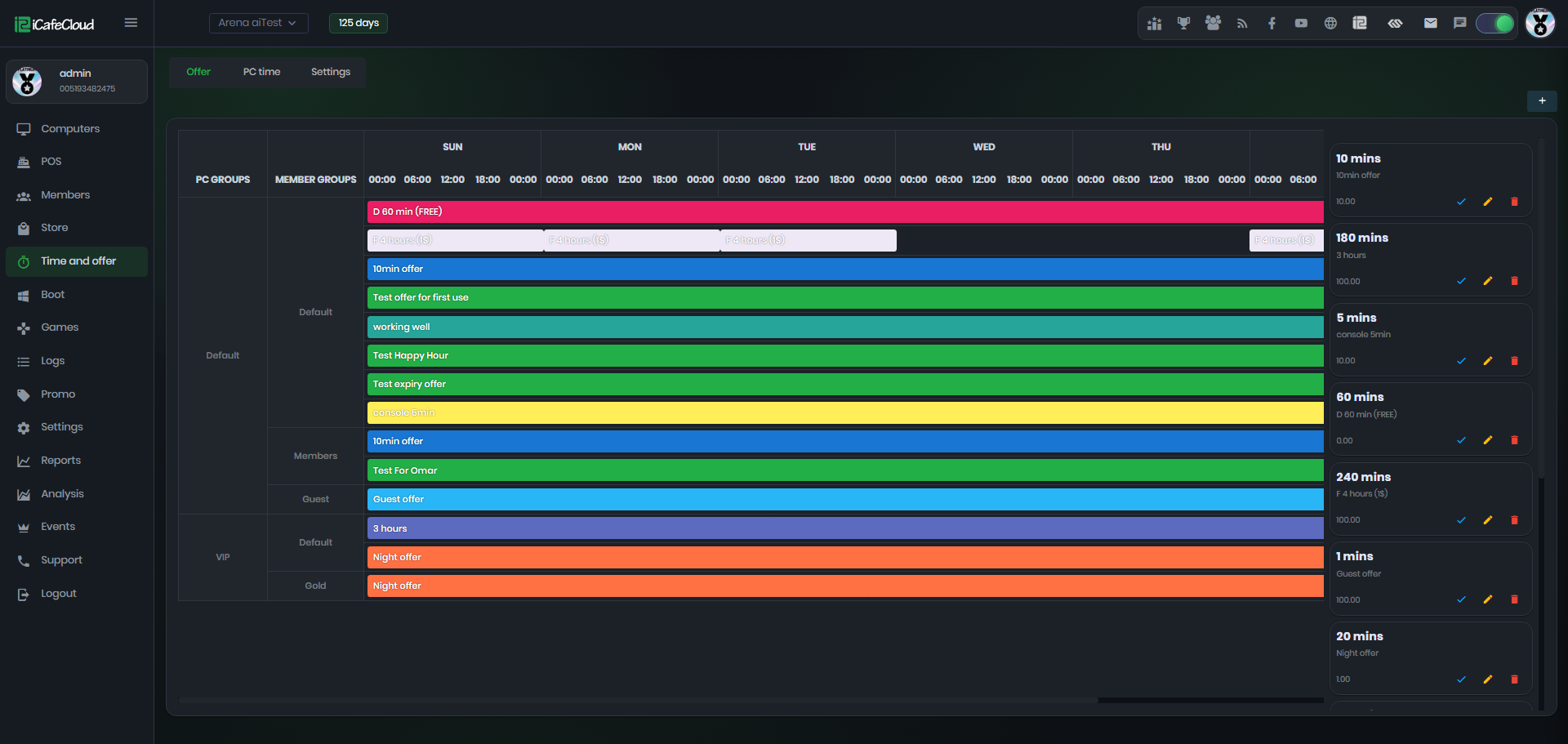
Figure 5
- Copy the access token, then paste it into the "Square Access Token" field in iCafeCloud.
- For the Square currency, select USD or any other currency supported by Square. (Figure 6)
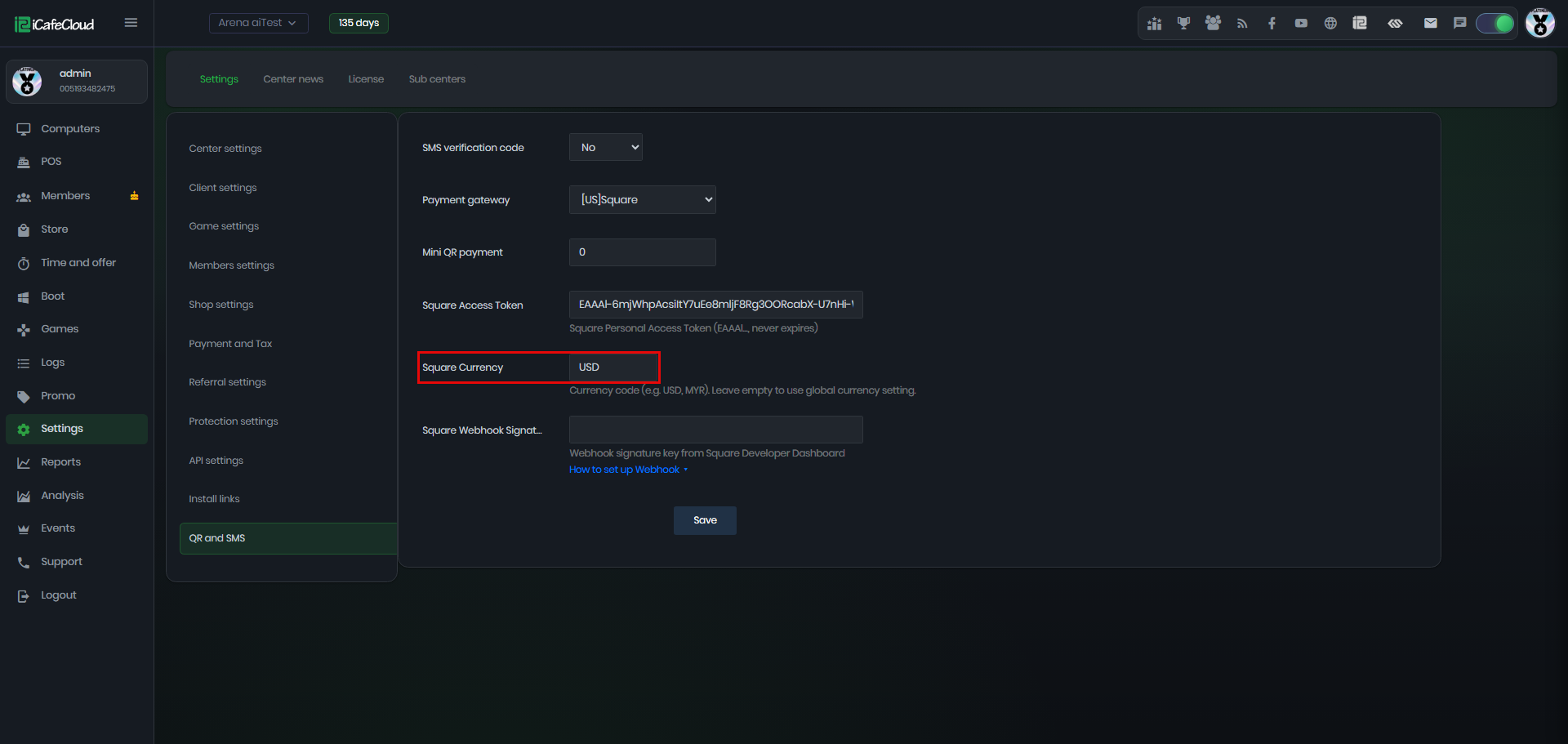
Figure 6
- For the Square Webhook Signature, click "How to Set Up Webhook" to display the steps. (Figure 7)
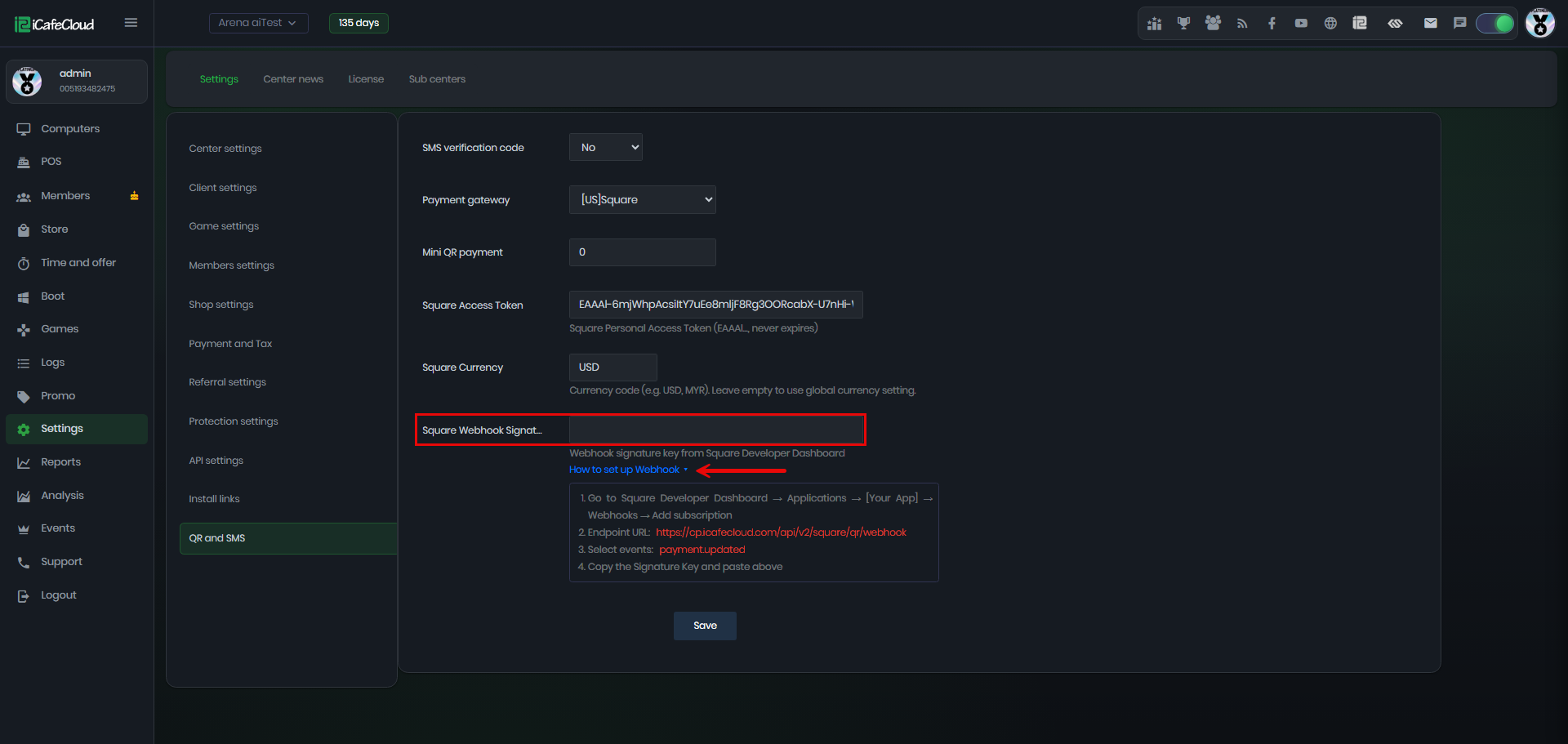
Figure 7
- Go to the Square developer dashboard at Webhooks and click "Subscriptions," then select "Production" for real transactions and click "Add Subscription."(Figure 8)
Figure 8
- Adding a subscription name is optional, but here we use "QR" since it will be used for QR payment. For the Notification URL, copy it from the "How to Set Up Webhook" page in iCafeCloud and paste it here. (Figure 9)
Figure 9
- Under Events, scroll down and find "payment.updated," select it, then click "Save." (Figure 10)
Figure 10
- In the Webhook Subscriptions list, click the subscription name (e.g., "QR") to open a side panel with its options. Find the Signature Key, copy it, and paste it into iCafeCloud. (Figure 11)
Figure 11
- Once you've filled in all the details, click "Save" to complete the integration successfully. (Figure 12)
Figure 12
Client side
- On the iCafeMenu login screen, clicking at "Balance" will allow you to top up your account directly ( Figure 1).
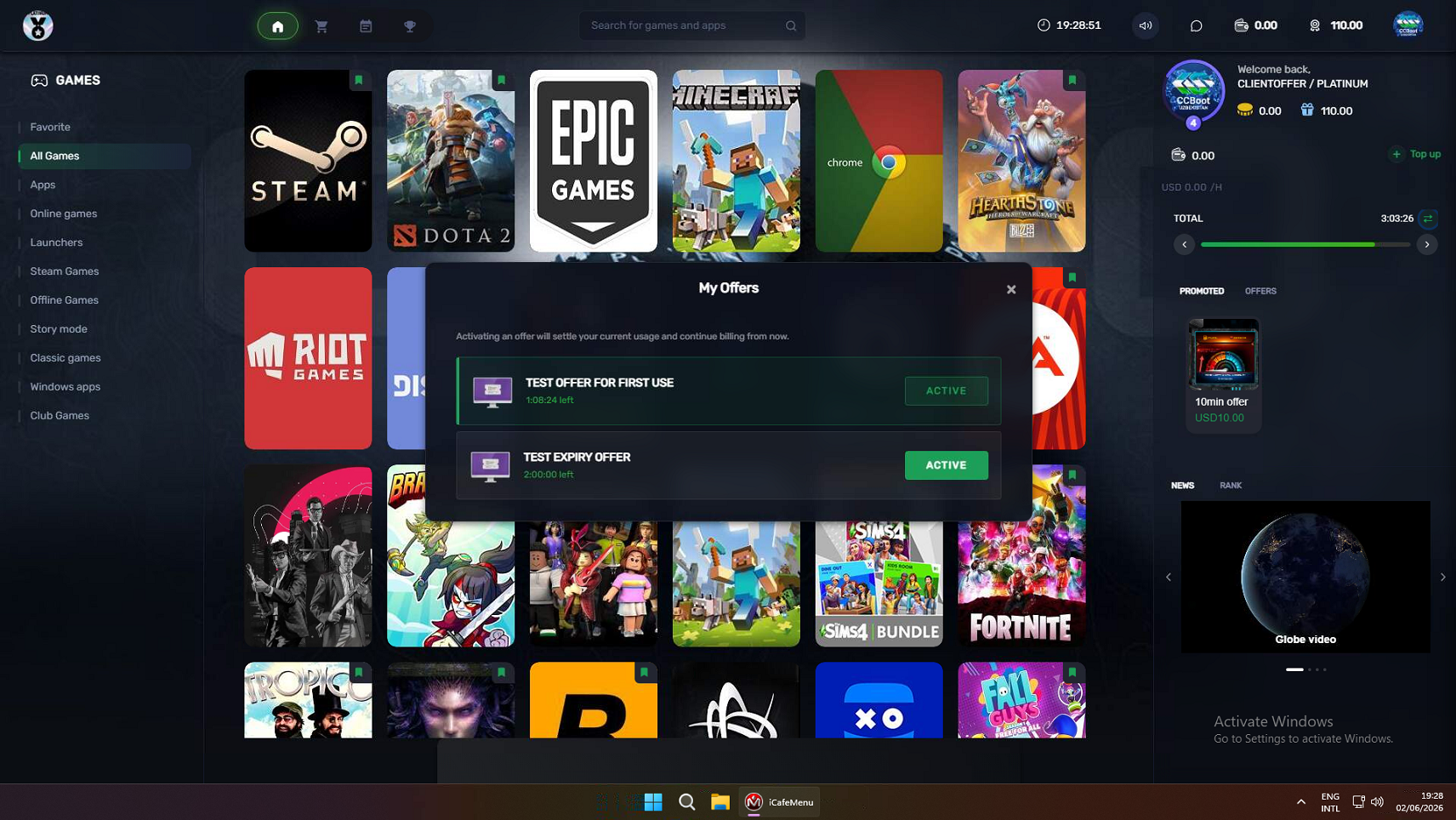
Figure 1
- Enter the member account and specify the top-up amount or the time in minutes the system will automatically calculate the equivalent value. Then, click the green button to confirm ( Figure 2).
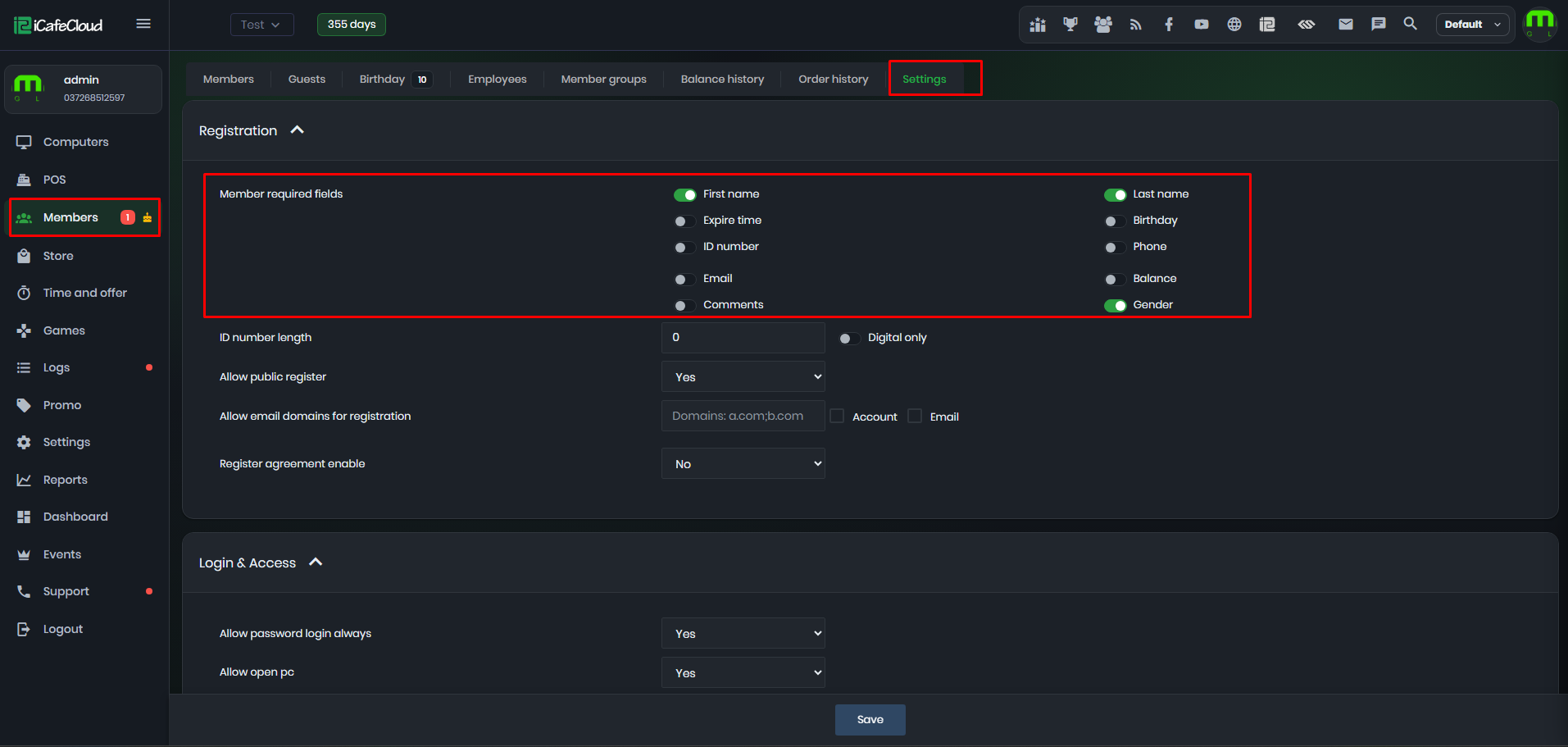
Figure 2
- After you click "OK" to confirm the top-up, a QR code will be displayed. (Figure 3)
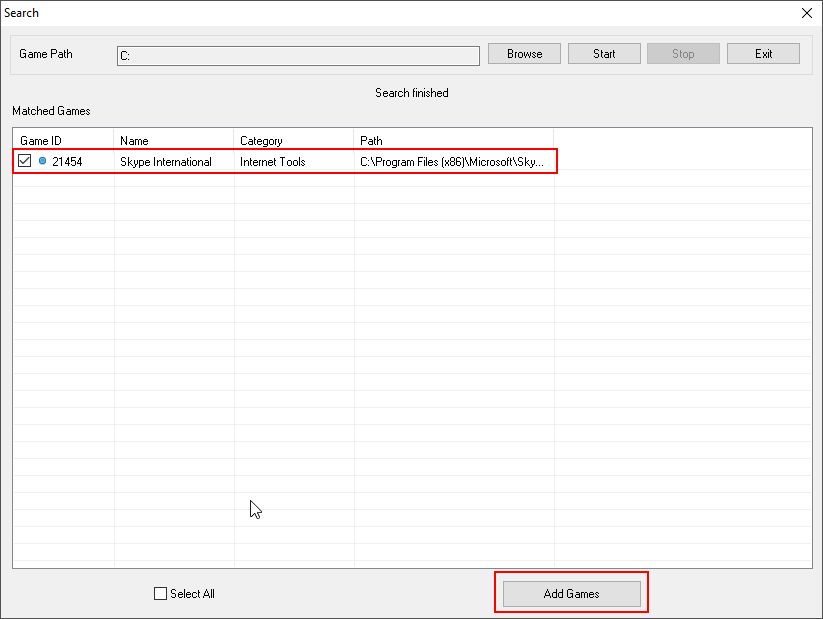
Figure 3
- In the admin panel, transactions will appear as "In Progress" in the SHOP history. (Figure 4)
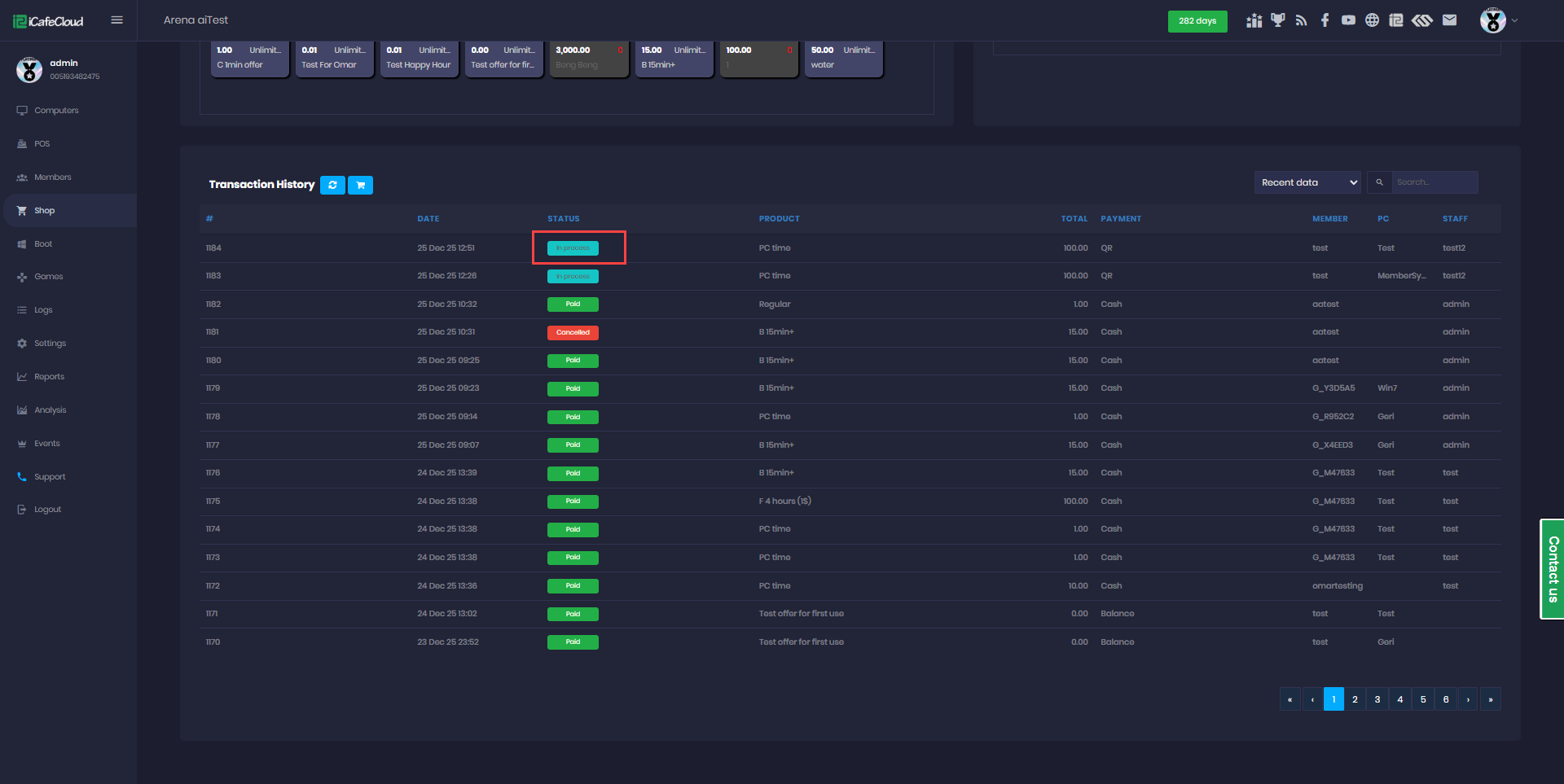
Figure 4
- Next, scan the displayed QR code with your phone to complete the payment
- Once the transaction is complete, its status will be updated to "Successful." (Figure 5)
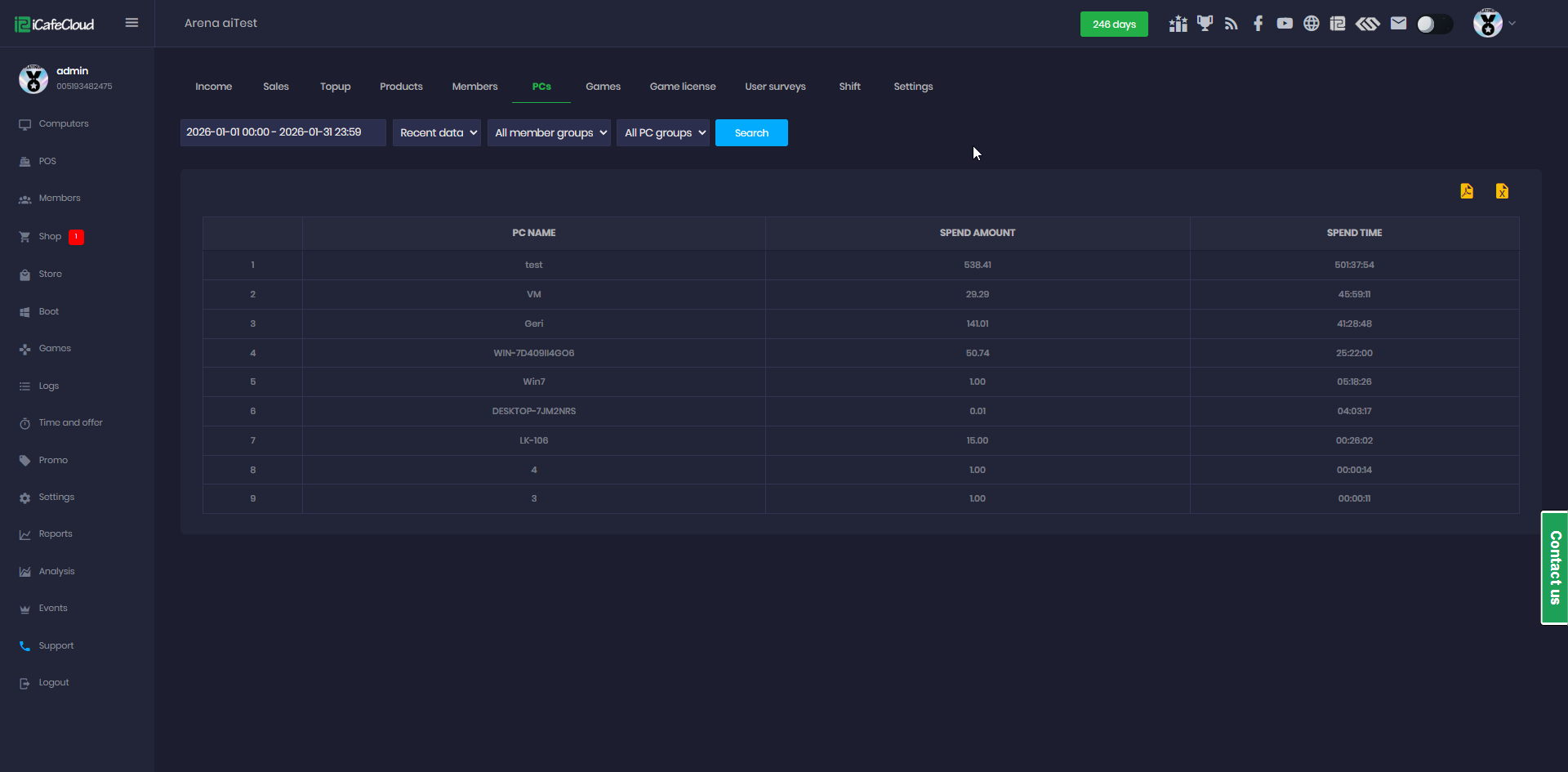
Figure 5
- If the Mini QR payment is set to 10, for example, the minimum payment should be 10 if less, an error will show at the client, preventing the transaction. (Figure 6)
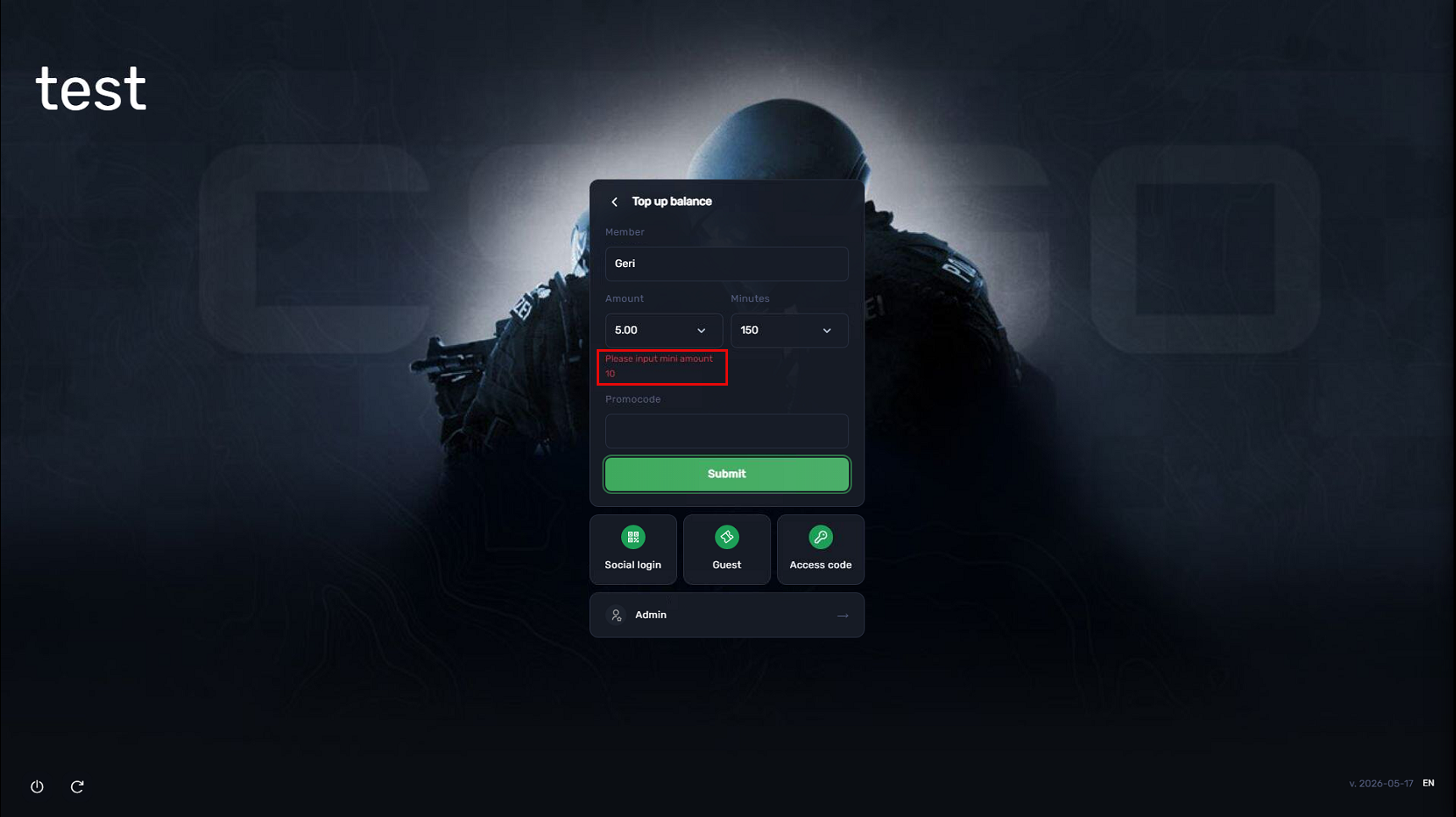
Figure 6